MenuMap - a menu that already knows the guest’s taste
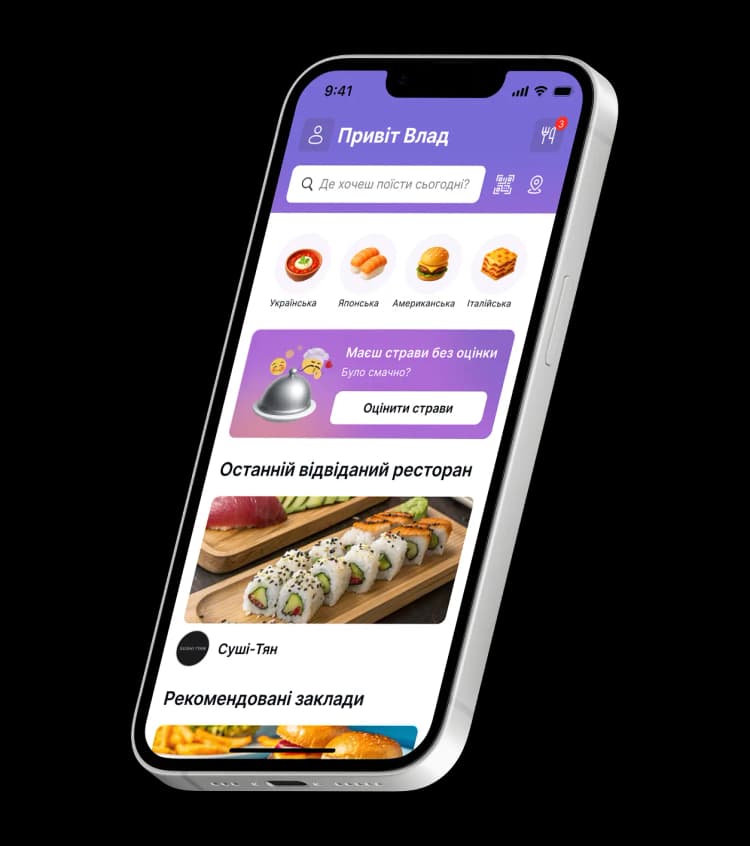
A guest opens a restaurant in MenuMap or scans a QR code, states their tastes, allergens and the ingredients they avoid - and sees not a long menu, but the dishes that suit them best.
For the guest, it means a faster and more confident choice.
For the restaurant - a higher chance that every guest finds “their” dish on the menu, orders it and comes back again.
The problem we solve
Most digital menus simply show a list. The guest sees dozens of items and still has to figure out on their own:
- What they will enjoy
- Where allergens or unsuitable ingredients might be hiding
- Which dishes match their mood
- What exactly is worth ordering in this restaurant
As a result, strong dishes get lost in the menu, and the guest’s decision remains a matter of chance: based on a photo, a name, a price or a waiter’s advice.
The menu stops being a passive list and becomes a personal recommendation.
A simple example
A guest with a nut allergy opens a menu with 80 items. Instead of questioning the waiter about every dish or settling for a “safe” salad, in MenuMap she immediately sees nut-free dishes sorted to her tastes. The choice takes a minute, not ten - and it is a choice in favour of the dish she truly wants, not the simplest one.
How it works for the guest
- 1The guest opens MenuMap or scans a QR code in the restaurant.
- 2States what they like, what they don’t eat and which ingredients don’t suit them.
- 3Opens the restaurant’s menu.
- 4Sees the dishes sorted to their taste.
- 5Rates the dishes, and the recommendations become more accurate over time.
The guest does not search at random. They immediately see where to start.
What the restaurant gets
The main thing: connecting requires no changes in how the venue operates.
There is no need to integrate a new system, change the POS, rework the menu or train the staff. MenuMap works as an additional recommendation layer on top of the existing menu and does not replace the QR menu, the website, delivery or the accounting system.
Today it comes down to three concrete things:
Visibility of strong dishes
The items that best match a guest’s tastes no longer get lost on the fifth page of the menu.
A more confident guest choice
A person with an allergy or dietary restrictions chooses without fear and without ten questions to the waiter.
Aggregated interest analytics
Which dishes are viewed, saved and rated - without any personal data.
Over time - menu analytics across locations, spotting underrated items, testing new dishes through recommendations, and personalised promotion without losing the guest’s trust.
But what about competition?
Recommendations are built on the preferences of the specific guest - so the people who come to your venue are a relevant audience your kitchen genuinely suits. Such a guest is more likely to leave satisfied and come back. You don’t get random traffic - you get people who were looking for exactly the kind of menu you have.
This is not yet another catalogue. It is a way to make the menu an active sales tool.
The principle of trust - and why it benefits the restaurant
MenuMap works with tastes, allergens and dietary restrictions, so trust is critical. We do not sell guests’ personal profiles to restaurants - the venue receives only aggregated analytics.
This is not a limitation but the engine of your visibility: a guest who trusts the recommendations uses them more often - and more people see your dishes.
Get free trial access to the MenuMap analytics dashboard
There is nothing to integrate. The menu stays as it is. You will see how it looks through your guests’ eyes - and which dishes deserve more attention.
In brief
MenuMap is not just another digital menu.
- The guest finds what suits them faster.
- The restaurant showcases its strong dishes better.
- The menu becomes not a list of items, but a source of data, recommendations and demand.
MenuMap is a menu that already knows the guest’s taste.